Tag: custom stickers

  • Best Products to Order With Custom Stickers for a Brand Launch

    Best Products to Order With Custom Stickers for a Brand Launch

    TLDR

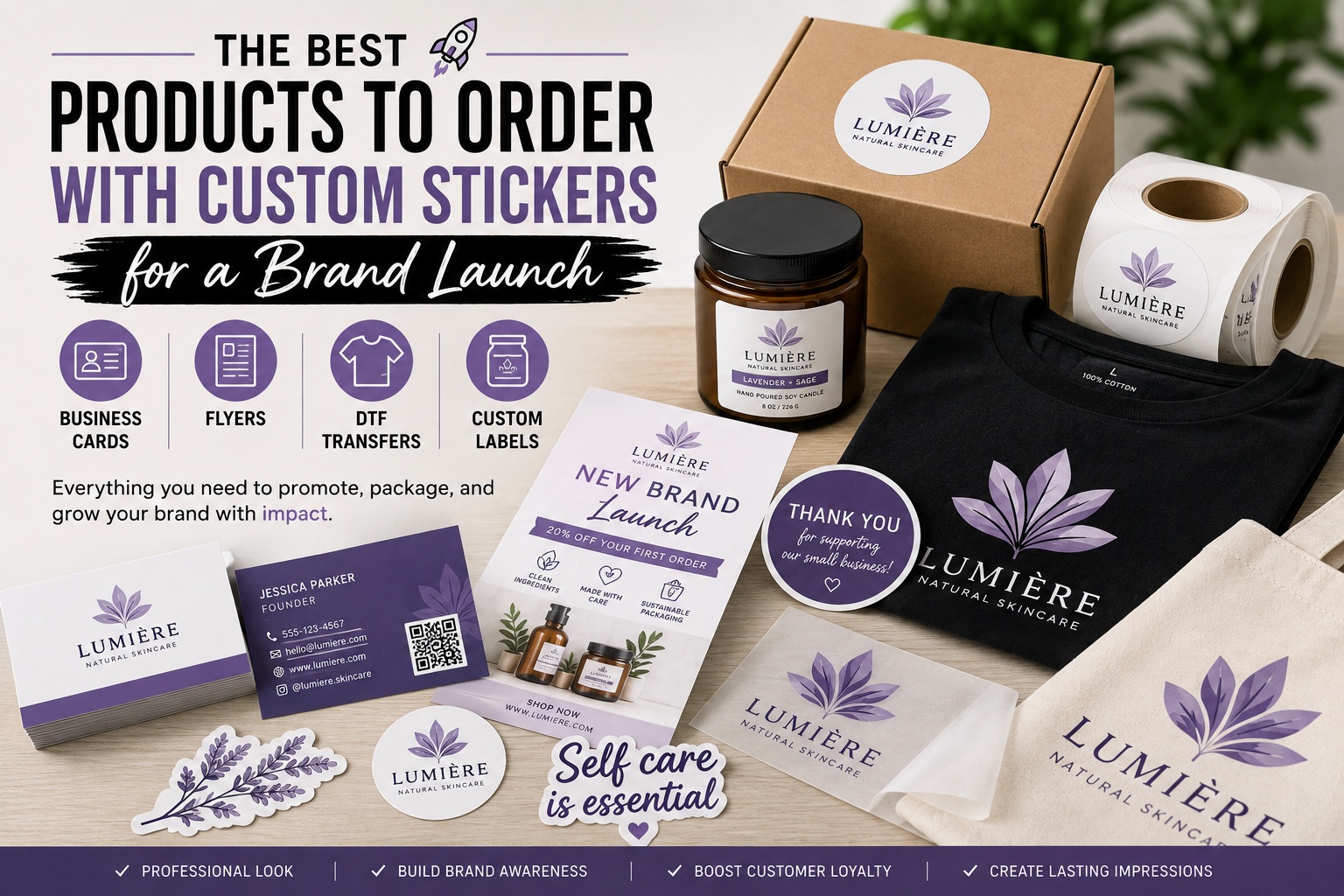
    Custom stickers are a strong starting point for a brand launch, but they work even better when paired with the right printed products. Business cards help with networking, flyers explain the offer, labels polish your packaging, and DTF transfers let you create branded merch or team apparel. The best launch setup is simple: order the products that support how people will first meet, buy from, and remember your brand.

    A brand launch has a lot of moving parts. You need something people can notice, something they can take with them, something that makes your packaging look finished, and something that keeps your name visible after the first interaction.

    That is why choosing the best products to order with custom stickers matters. Stickers are flexible, low-friction brand pieces, but they should not carry the whole launch alone. They work best as part of a small, practical launch kit that includes business cards, flyers, labels, and apparel or merch when it makes sense.

    The goal is not to order every printed product available. The goal is to build a tight set of launch materials that feels consistent, useful, and easy to hand out or pack with orders.

    Start With Custom Stickers as the Anchor

    Custom stickers are often the easiest launch item to justify because they can do several jobs at once. You can use them as giveaways, packaging seals, product extras, event handouts, laptop stickers, water bottle stickers, or small thank-you gifts inside orders.

    That flexibility matters during a launch. You may not know yet which sales channel will perform best. You might be testing markets, pop-ups, ecommerce, wholesale samples, local events, or influencer mailers. Stickers can move between all of those without feeling out of place.

    For a brand launch, keep at least one sticker design simple and recognizable. A clean logo sticker or brand mark gives you something you can use almost anywhere. Then, if budget allows, add one more sticker with a slogan, mascot, icon, or design people would actually want to keep.

    Good launch sticker ideas include:

    • A clean logo sticker
    • A slogan or catchphrase sticker
    • A product-themed sticker
    • A small thank-you sticker
    • A QR code sticker for menus, signups, or reorder pages
    • A limited launch edition sticker

    The best sticker is not always the most detailed one. For launch use, clarity usually wins. People should understand the design quickly, especially if the sticker is being handed out at an event or included in packaging.

    Business Cards for Networking and Local Introductions

    Even if your launch is mostly online, business cards still have a place. They are useful at markets, pop-ups, trade shows, local meetings, vendor events, pickup orders, and casual conversations where pulling out a phone feels slower than handing someone a card.

    A business card should not try to explain everything. It should make the next step clear.

    Include:

    • Brand name
    • Logo
    • Website
    • Email or contact method
    • Social handle
    • QR code if useful
    • A short line about what you sell or offer

    For a brand launch, the back of the card can do extra work. You can add a launch discount, a short product description, a “scan to shop” QR code, or a simple tagline. Keep it clean. A cluttered business card feels less confident, even if the business behind it is strong.

    Business cards also pair well with stickers. You can attach a small sticker to the card, include both in an order, or use the sticker as a small visual cue that makes the card feel less generic.

    A good launch card should answer one question fast: “What should I do next?”

    Flyers for Explaining the Brand Quickly

    Flyers are useful when your launch needs more explanation than a sticker or business card can provide. They give you room for a product lineup, a launch offer, a local event announcement, a menu, a service list, or a short brand story.

    Flyers are especially helpful for:

    • Grand openings
    • Pop-up shops
    • Farmers markets
    • Local service launches
    • Product drops
    • Restaurant or food brand launches
    • Community events
    • Retail counter displays
    • Package inserts

    The mistake with flyers is trying to fill every inch. A flyer should be easy to scan. Use one clear headline, a few short details, strong product photos or graphics, and one main call to action.

    For example:

    “New local candle studio now open.”

    Then add the essentials: what you sell, where to find you, what makes the launch offer worth noticing, and how to order.

    A flyer can also work as a package insert. If someone buys from you during the launch, include a flyer that shows the rest of the product line, explains your care instructions, or gives them a reason to come back.

    Pair flyers with custom stickers by using the sticker as a visual highlight. A sticker can call out “New,” “Launch Offer,” “Limited Drop,” or “Scan to Shop.” It gives the flyer a more physical, layered feel without needing a complicated print setup.

    Custom Labels for Packaging and Product Presentation

    If your brand launch includes physical products, custom labels may be just as important as stickers. Labels help products look finished, organized, and ready to sell.

    Use labels for:

    • Product packaging
    • Bottles and jars
    • Bags and boxes
    • Scent, flavor, color, or size variants
    • Ingredient or care information
    • Batch names
    • Shipping and handling details
    • Branded packaging seals

    Labels are especially important if your launch involves products sitting on a shelf, table, counter, or display. A plain container may be functional, but a clear label tells people what the product is and why it belongs to your brand.

    This is one of those details people may not consciously praise, but they notice when it is missing.

    For launch labels, consistency matters. Use the same logo, colors, font style, and basic layout across your product line. If you sell multiple scents, flavors, sizes, or styles, create a simple system that changes only what needs to change.

    For example:

    • Same label shape
    • Same logo placement
    • Same product name area
    • Same information layout
    • Different color or small icon for each variant

    That makes the product line feel connected without making every item look identical.

    DTF Transfers for Apparel, Totes, and Launch Merch

    DTF transfers are a strong add-on when your launch needs apparel or branded merch. They let you put your design on shirts, hoodies, tote bags, uniforms, event apparel, and small-batch merchandise.

    This can work in a few ways.

    First, you can create shirts or hoodies for your team. If you are working a pop-up, market, or launch event, matching apparel helps customers know who to talk to.

    Second, you can create customer-facing merch. A good shirt or tote can give early customers a way to support the brand beyond the main product.

    Third, you can make limited launch pieces. A small first-run shirt, tote, or hoodie can feel special without committing to huge inventory.

    DTF transfers are best when you already have a clear design and a plan for the blank garments. Think through placement before ordering. A left-chest logo, sleeve print, tote bag graphic, or full-front design all feel different.

    For most brand launches, simple merch is safer than overly complex merch. A clean logo tee or tote can last longer than a design that only makes sense for one campaign.

    What to Order Together for Different Launch Types

    The best products to order with custom stickers depend on how your brand is launching. A product-based ecommerce launch has different needs than a local service launch or a market booth.

    For an ecommerce product launch, start with:

    • Custom stickers
    • Product labels
    • Thank-you or insert cards
    • Branded packaging seals
    • Flyers that introduce other products

    For a local event or pop-up launch, start with:

    • Custom stickers
    • Business cards
    • Flyers
    • DTF shirts for staff
    • Labels for display products

    For a service business launch, start with:

    • Business cards
    • Flyers
    • Custom stickers
    • Vehicle, laptop, or equipment stickers if relevant
    • Simple leave-behind materials

    For a merch-focused launch, start with:

    • Custom stickers
    • DTF transfers
    • Product labels or size labels
    • Flyers or cards with care instructions
    • Packaging stickers

    The cleanest launch kits usually have one product for awareness, one product for explanation, one product for packaging, and one product for follow-up.

    Keep the Design System Consistent

    A launch can start to feel scattered when every item looks like it came from a different place. Your sticker, card, flyer, label, and shirt do not need to be identical, but they should feel related.

    Before ordering, set a simple brand system:

    • One primary logo
    • One simplified logo or icon
    • Two or three core colors
    • One or two fonts
    • One short tagline
    • One preferred QR code destination
    • One main call to action

    Then apply that system across everything.

    Your business card might be clean and minimal. Your flyer might have more detail. Your label might be smaller and more functional. Your DTF shirt might be bolder. That is fine. They just need to feel like part of the same launch.

    This is where custom stickers help. A consistent sticker design can tie together plain packaging, printed cards, flyers, and merch without making everything custom from scratch.

    Order Quantities Based on Use, Not Guesswork

    It is easy to over-order for a launch because everything feels important. But printed materials should match your actual plan.

    Ask a few practical questions:

    • How many orders do you expect in the first month?
    • How many people will attend your launch event?
    • How many packages need labels?
    • How many flyers can you realistically distribute?
    • How many team members need apparel?
    • Will these designs still be usable after launch week?

    For evergreen items like logo stickers, business cards, and basic labels, ordering more usually makes sense if you know you will keep using the same branding.

    For time-sensitive items like launch flyers, dated event materials, or limited campaign stickers, be more careful. You do not want to be stuck with hundreds of pieces that are only useful for one weekend.

    Common Mistakes to Avoid

    A brand launch does not need to be perfect, but a few mistakes can make printed materials less useful.

    Avoid ordering too many dated materials. Anything with a specific launch date, sale date, or event detail has a short life.

    Avoid making stickers too detailed. Small stickers need simple designs, strong contrast, and readable text.

    Avoid using different colors across every product. If your business card is navy, your flyer is teal, your label is lime, and your shirt is burgundy, the launch may feel disconnected.

    Avoid hiding the next step. Every printed piece should point people somewhere: shop online, scan the code, follow the account, visit the booth, or contact the business.

    Avoid treating packaging as an afterthought. If customers receive a product in plain or confusing packaging, the launch feels less complete.

    A Simple Brand Launch Print Kit

    For most small brands, a strong launch kit can be simple:

    • Logo stickers for giveaways and packaging
    • Business cards for conversations and local networking
    • Flyers for events, inserts, or product explanations
    • Custom labels for packaging and product organization
    • DTF transfers for shirts, totes, or limited merch

    That set covers the main launch moments: discovery, explanation, purchase, packaging, and memory.

    You can always add more later. But starting with these pieces gives your brand a physical presence without turning the launch into a packaging project that eats the whole budget.

    Conclusion

    The best products to order with custom stickers for a brand launch are the ones that support real customer moments. Stickers help people remember you. Business cards make follow-up easier. Flyers explain the offer. Labels make products look finished. DTF transfers turn your logo or artwork into apparel and merch.

    Start with the products that match your launch plan. Keep the design consistent. Order practical quantities. And make every printed piece point toward one clear next step.

    A good launch kit does not need to be complicated. It needs to feel ready.
  • Affordable Ways to Brand Your Shipments

    Affordable Ways to Brand Your Shipments

    TLDR

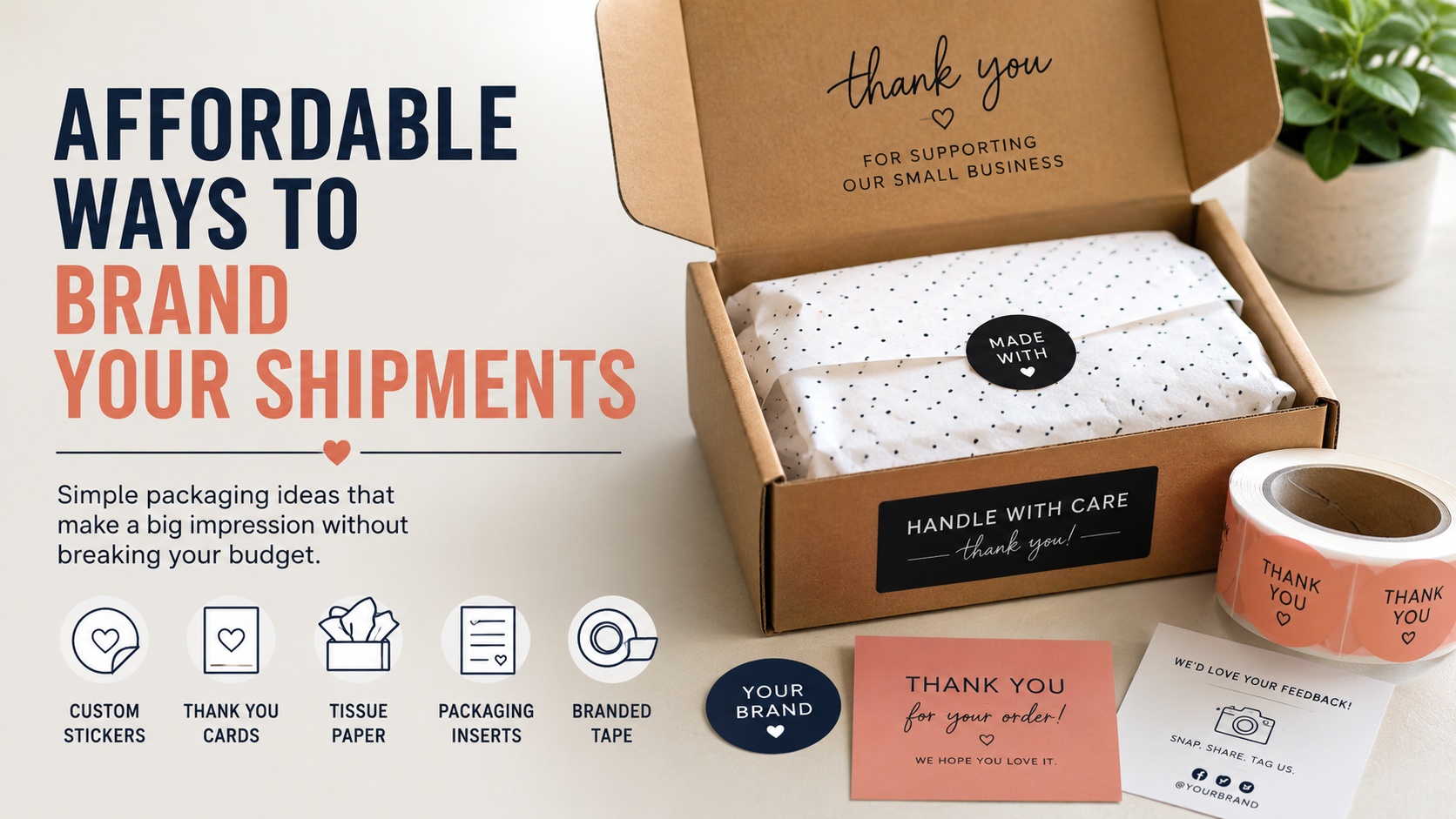
    Affordable ways to brand your shipments include branded stickers, simple thank-you cards, tissue paper, printed inserts, custom tape, and small free extras. You do not need fully custom boxes to make orders feel polished. Start with one or two repeatable packaging touches, keep the design clean, and use the same brand colors, logo, and message across every shipment.

    A small shipment can say a lot before the customer even opens it.

    That does not mean every order needs a custom printed box, ribbon, sleeve, postcard, tissue wrap, and a dramatic reveal. For most small businesses, that would be too much. The better move is simpler: choose affordable ways to brand your shipments that make the package feel intentional without slowing down fulfillment or eating into your margins.

    Good shipment branding is not about making packaging look expensive for the sake of it. It is about giving customers a clear, consistent impression. The package should feel like it came from your business, not from a random warehouse shelf.

    Why Shipment Branding Matters

    Your shipment is often the first physical touchpoint a customer has with your brand. They may have seen your website, emails, ads, or social posts, but the package is the moment your business becomes real.

    That is why shipment branding matters. It helps customers remember where the order came from. It makes the product feel more cared for. And in some cases, it can encourage repeat purchases, reviews, referrals, or social sharing.

    The trick is to keep it practical. A package still has one main job: protect the product and get it to the customer in good condition. Branding should support that job, not get in the way.

    A good branded shipment usually does three things:

    • Makes the order easy to recognize
    • Makes the product feel thoughtfully packed
    • Gives the customer a small reason to remember the brand

    That can happen with very small details.

    Start With Branded Stickers

    Custom stickers are one of the easiest affordable ways to brand your shipments because they are flexible. You can use the same sticker across boxes, mailers, tissue paper, product bags, thank-you cards, and packing slips.

    A simple logo sticker on the outside of a plain kraft box can make the package feel more finished. A small seal on tissue paper can make a basic wrap feel deliberate. A branded sticker on a packing slip can make even a simple order feel more personal.

    You can also create seasonal stickers, “packed with care” stickers, or reorder reminder stickers without changing the rest of your packaging.

    For a simple starting point, use custom packaging stickers that include your logo, brand colors, or a short message. Keep the design readable. A sticker does not need to carry your entire brand story. It just needs to look clean and feel consistent.

    Good sticker ideas for shipments include:

    • Logo seals for boxes and mailers
    • “Thank you for your order” stickers
    • “Packed with care” stickers
    • QR code stickers for care instructions or reorder pages
    • Seasonal stickers for holiday or limited-time packaging
    • Free bonus stickers customers can keep

    If you only add one branded element, stickers are usually the most forgiving place to start.

    Use Plain Packaging With One Strong Branded Detail

    Custom boxes can look great, but they are not always the best first move. They can cost more, require higher order quantities, and take up storage space. For a newer shop or a small brand with changing product sizes, plain packaging plus one strong branded detail is often smarter.

    That could mean:

    • A plain white mailer with a logo sticker
    • A kraft box sealed with branded tape
    • A simple padded mailer with a thank-you card inside
    • Tissue paper closed with a custom sticker
    • A stock product box finished with a branded label

    This approach gives you control without forcing you into one expensive packaging format.

    It also makes testing easier. You can try a few sticker sizes, finishes, insert cards, and messages before committing to a larger packaging system. Once you know what works, then you can decide if custom boxes, printed mailers, or more advanced packaging are worth it.

    Add Thank-You Cards That Feel Human

    A thank-you card is a small thing, but it can do a lot. It gives the customer a moment of recognition. It also gives you space to explain care instructions, promote a reorder code, ask for a review, or invite the customer to follow your brand.

    The best thank-you cards are short and specific. They do not need to sound overly polished. In fact, simple usually feels better.

    Here are a few examples:

    “Thanks for your order. We packed this with care and hope you love it.”

    “Your support means a lot to our small business. Thanks for choosing us.”

    “Need help with your order? Contact us here before leaving a review. We’ll make it right.”

    That last one is especially useful. A clear support message can reduce frustration if something arrives damaged, delayed, or incorrect.

    For a cleaner package, pair the thank-you card with a branded sticker. You can place the sticker on the envelope, attach it to the card, or include it as a small freebie.

    Turn Packaging Inserts Into Helpful Mini Guides

    Packaging inserts are not just for coupons. They can help customers use the product correctly, avoid mistakes, and understand what to do next.

    This works especially well for products that need care, assembly, sizing, storage, or special handling. A short insert can reduce support questions and make the product experience smoother.

    Useful insert ideas include:

    • Product care instructions
    • Setup steps
    • Sizing or fit tips
    • Reorder instructions
    • QR codes for tutorials
    • Review requests
    • Referral codes
    • Warranty or return details
    • “How to get the best results” tips

    The key is to keep the insert useful. Do not turn every insert into a sales pitch. A customer who just bought from you does not need to be shouted at. Give them something that helps.

    For example, a candle brand could include burn instructions. A skincare brand could include a simple morning or night routine. A clothing brand could include washing tips. A sticker shop could include surface prep instructions for best adhesion.

    Helpful packaging feels thoughtful. And thoughtful packaging is easier to remember.

    Use Tissue Paper Without Overcomplicating It

    Tissue paper is one of the simplest ways to make a shipment feel more polished. It adds a layer between the shipping container and the product, which makes the order feel less like it was dropped into a box.

    You do not need custom printed tissue paper right away. Plain tissue paper in a brand color can work well. Seal it with a logo sticker or a short message sticker, and the whole package feels more intentional.

    This is especially useful for:

    • Apparel
    • Accessories
    • Beauty products
    • Handmade goods
    • Giftable items
    • Subscription boxes
    • Small product bundles

    The tradeoff is time. Tissue paper adds a packing step, so it may not make sense for every order. If you ship high volume, use it for premium products, gift orders, first-time customers, or special campaigns.

    Try Branded Tape or Sticker Seals

    Branded tape is useful when you want the outside of the package to feel more recognizable. It can turn a plain box into a branded box without paying for fully printed packaging.

    But branded tape is not always the first thing I would buy. It works best when you ship a lot of similar boxes and want your packages to look consistent on doorsteps or in receiving areas.

    Sticker seals are often easier for small businesses. They are faster to apply, easier to store, and more flexible across different package sizes.

    A good rule:

    Use branded tape if you ship boxes often. Use sticker seals if you ship a mix of boxes, mailers, bags, and envelopes.

    Both can work. The better choice depends on your fulfillment setup.

    Include a Small Freebie Customers Will Actually Use

    Freebies can be a great part of shipment branding, but they should make sense. A random throwaway item can feel wasteful. A useful or on-brand extra can make the order feel generous.

    Stickers are a strong option here because they are lightweight, easy to include, and do not usually change shipping costs. They can also turn customers into walking brand reminders if the design is something people want to put on a laptop, bottle, notebook, or toolbox.

    A good freebie sticker is not just your logo in a circle. It should have some personality. Think about what your customers would actually keep.

    Ideas include:

    • A simple slogan
    • A mascot
    • A funny phrase
    • A seasonal design
    • A small illustrated icon
    • A product-related design
    • A customer community phrase

    For efficient packing, order stickers in a size that is easy to drop into every package. You can also use custom roll labels if you want a fast way to apply branded labels or seals at higher order volumes.

    Make the Shipping Label Area Cleaner

    This is not the most exciting tip, but it matters. A package can have nice branding and still look messy if the shipping label is crooked, wrinkled, or fighting with too many other elements.

    Leave enough clean space for the shipping label. Put branded stickers where they do not cover barcodes, addresses, return labels, warnings, or carrier instructions.

    For most packages, the best layout is simple:

    • Shipping label on the largest flat surface
    • Brand sticker near the flap, corner, or side
    • Any fragile or handling labels placed clearly
    • No branding over seams that may tear during opening

    Clean placement makes the whole package feel more professional.

    Keep Your Colors and Fonts Consistent

    Affordable branding works best when the pieces match. A sticker, thank-you card, tissue paper, and insert should look like they belong to the same business.

    You do not need a complex brand guide. A simple system is enough.

    Choose:

    • One main logo version
    • Two or three brand colors
    • One headline font
    • One body font
    • One short brand message
    • One preferred sticker shape or label style

    Then repeat those choices.

    Consistency does more than make the package look good. It helps customers recognize you faster. When every shipment has a familiar color, mark, or message, your packaging becomes easier to remember.

    Avoid Branding Every Surface

    One of the easiest mistakes is doing too much. A branded shipment does not need your logo on every flap, insert, label, and piece of tissue paper.

    Too much branding can feel cluttered. It can also make packing more expensive and slower than it needs to be.

    A better approach is to pick one outside branding moment and one inside branding moment.

    For example:

    • Outside: logo sticker on the mailer
    • Inside: thank-you card with a small free sticker

    Or:

    • Outside: branded tape on the box
    • Inside: tissue paper sealed with a custom sticker

    Or:

    • Outside: plain box
    • Inside: branded insert, tissue, and sticker freebie

    This keeps the package polished without making it feel overbuilt.

    Match the Upgrade to the Customer Moment

    Not every shipment needs the same level of branding. A first order, gift order, subscription shipment, wholesale package, and replacement order may all need different touches.

    For first-time customers, focus on trust. Include a thank-you card, support contact, and useful product instructions.

    For repeat customers, focus on recognition. Add a loyalty note, reorder code, or small bonus.

    For gift orders, focus on presentation. Tissue paper, a clean insert, and a nice seal matter more here.

    For wholesale or retail shipments, focus on organization. Labels, product information, and clear packing can matter more than decorative details.

    This is where affordable packaging gets easier. Instead of upgrading everything, upgrade the moments where it matters most.

    A Simple Budget-Friendly Shipment Branding Plan

    If you are starting from scratch, here is a practical setup:

    1. Use plain boxes or mailers that fit the product well.
    2. Add one branded sticker to the outside.
    3. Wrap or secure the product neatly inside.
    4. Add a thank-you card with support information.
    5. Include a small free sticker or useful insert.
    6. Keep the same colors and message across every piece.
    7. Review customer feedback before adding more packaging items.

    This gives you a clear branded shipment without adding too much cost or complexity.

    Over time, you can add more. Maybe you upgrade to branded tape. Maybe you create seasonal stickers. Maybe you test custom tissue paper. But you do not have to start there.

    Start with the details customers notice, then build from there.

    Conclusion

    Affordable ways to brand your shipments do not have to be complicated. A clean sticker, a useful insert, a short thank-you note, or a simple tissue wrap can make a plain package feel like it came from a real brand with real care behind it.

    Start small. Choose packaging details that are easy to repeat, easy to pack, and easy for customers to understand. The goal is not to make every shipment fancy. The goal is to make every shipment feel intentional.

    When customers remember the package, they are more likely to remember the business.